
Policy Event — WiderAdvance Facility Consortium | Brussels, 12 June 2026
On 12 June 2026, the WiderAdvance Facility Consortium brought together policymakers, regional development agencies, European networks, and project coordinators for a dedicated policy workshop hosted at the NCBR office in Brussels. The event addressed a question that is what WiderAdvance was created for: how can Widening countries and outermost regions build the conditions for research to generate societal impact on their territories?
The workshop was chaired by our colleagues from Ruizia - Evelyne Tarnus and Philippe Holstein, who coordinated the event together with Ian Gauci Borda from Xjenza Malta, and Katarzyna Walczyk-Matuszyk from IPPT PAN.
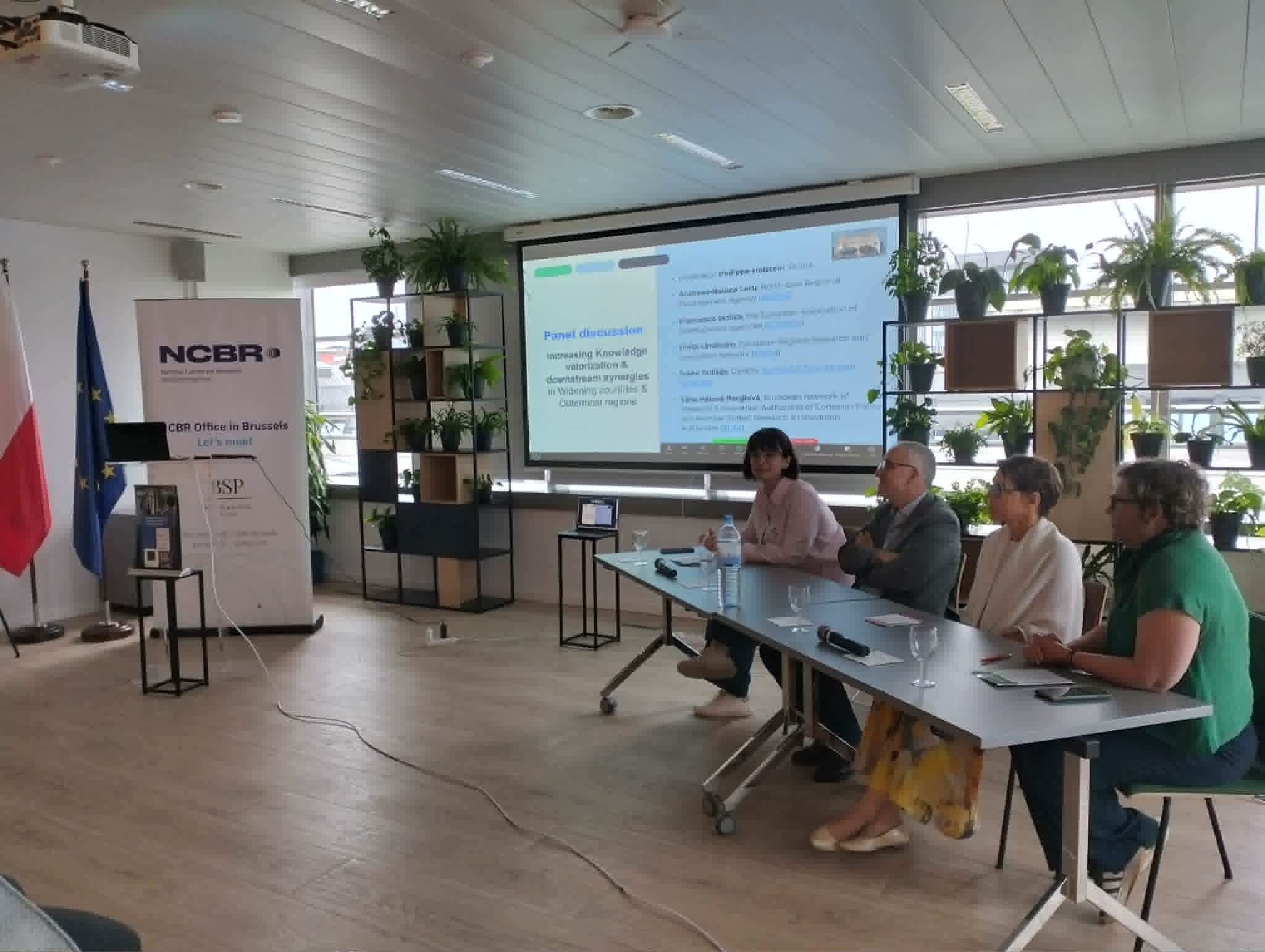
From research excellence to territorial impact: a question of means, not merit
Widening and outermost regions have, over several decades, built significant research capacities. Yet for most of them — particularly outside capital regions — the gap between knowledge production and territorial impact remains wide. The reasons are structural: fragmented policy mixes, limited knowledge absorption capacities, weak academia-industry linkages, and funding instruments that were not designed to work together.
This is the challenge that the concept of regional knowledge valorisation systems seeks to address, not as a single activity or project, but as an ecosystem of interdependent capacities that must be deliberately built and sustained through adapted public policies.
A panel that illuminated every dimension of the KV challenge in Widening contexts
The panel brought together six practitioners and policymakers, each offering a distinct perspective on this shared challenge.
Silvia Nemeth, Deputy Head of Unit for Knowledge Valorisation and Technology Infrastructures at DG RTD (European Commission), opened with an overview of the EU policy landscape. She traced the evolution from "technology transfer" to the broader concept of knowledge valorisation — defined as creating social and economic value from knowledge — and presented the portfolio of ongoing initiatives: four Codes of Practice on intellectual asset management, standardisation, industry-academia co-creation and citizen engagement; the Lab2Unicorn initiative supporting Technology Transfer Offices; new valorisation metrics published in April 2026; and a forthcoming Charter of Access for industrial users of technology infrastructures. Her message was clear: the policy architecture is being built, and participation in ongoing consultations and communities of practice is both open and necessary.
Andreaa Leru from the Northeast Romania Regional Development Agency (NERDA) provided a regional perspective. In a peripheral region of Europe, her agency has built inspiring valorisation programmes: coaching research teams from six universities through needs assessment, IP strategy and commercialisation, culminating in Demo Days with investors and industry; and supporting research centres to increase their market visibility through simplified contract procedures, service catalogues and NDAs. Her conclusion was unambiguous: "valorisation is a capability that needs to be built — money without an intermediary that builds market readiness and connects researchers to absorbers just funds more research that stays on the shelf." And her formulation will stay: "valorisation is spatial and relational."
Francesco Molina, Director of EURADA, the European Association of Development Agencies, brought a structural and political perspective. In Widening regions, EU funds represent 40 to 60% of total R&D expenditure — yet Horizon funds remain concentrated in the top decile of regions. The post-2027 MFF proposal, which removes thematic concentration obligations on research and innovation, represents a significant risk. He called for reinstating minimum ring-fencing for R&D in the new regulation, restoring smart specialisation as a mandatory element, and introducing policy sequencing logic — investing first in framework conditions before supporting innovation activities.
Pirita Lindholm, Director of ERRIN, the European Regions Research and Innovation Network, reinforced this warning. Research and innovation policy and cohesion policy are still developed in separate rooms. The removal of smart specialisation obligations from the post-2027 proposal weakens the very instrument that has enabled regions to mobilise stakeholders, build ecosystems, and facilitate interregional collaboration. Her recommendation: place-based innovation must be embedded in EU directly-managed programmes — including Horizon Europe and the forthcoming European Competitiveness Fund — and this alignment must happen now, during programme development.
Ivana Gulisija, coordinator of the SynHealth project (Genos, Croatia), illustrated both the promise and the friction of Horizon-ERDF synergies in practice. SynHealth translates validated glycan biomarker research into regional healthcare applications, bridging Horizon excellence and structural fund implementation. Her key finding: many regional funding calls are simply not designed to accommodate international Horizon Europe partners, and dedicated follow-up funding instruments — alongside a simplified Seal of Excellence for synergy projects — are needed to avoid starting from zero each time.
Tana Hálová Perglová, Director at the Technology Agency of the Czech Republic and member of RIMA, the European Network of Research & Innovation Authorities of Cohesion Policy and Member States’ Research & Innovation Authorities, closed the panel with a revealing insight from her working group's experience: when national officials from research policy and cohesion policy were first convened together, some colleagues from the same country did not know each other. Synergies, when they happen, are almost never structured — they occur by chance or because one person is pushing them. Her recommendation: combine top-down political leadership with bottom-up practitioner networks, and create real coordination mechanisms that survive government changes.
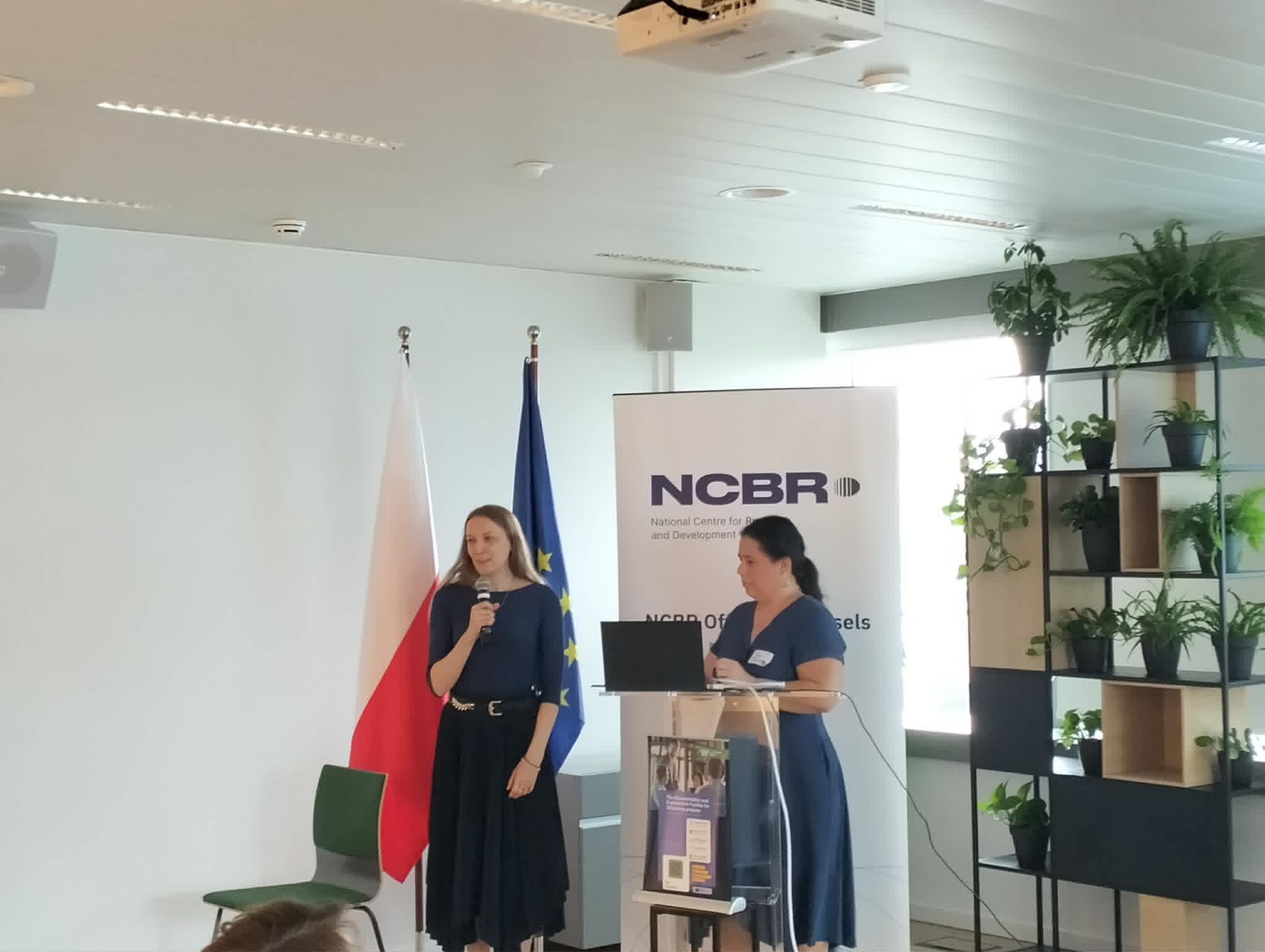
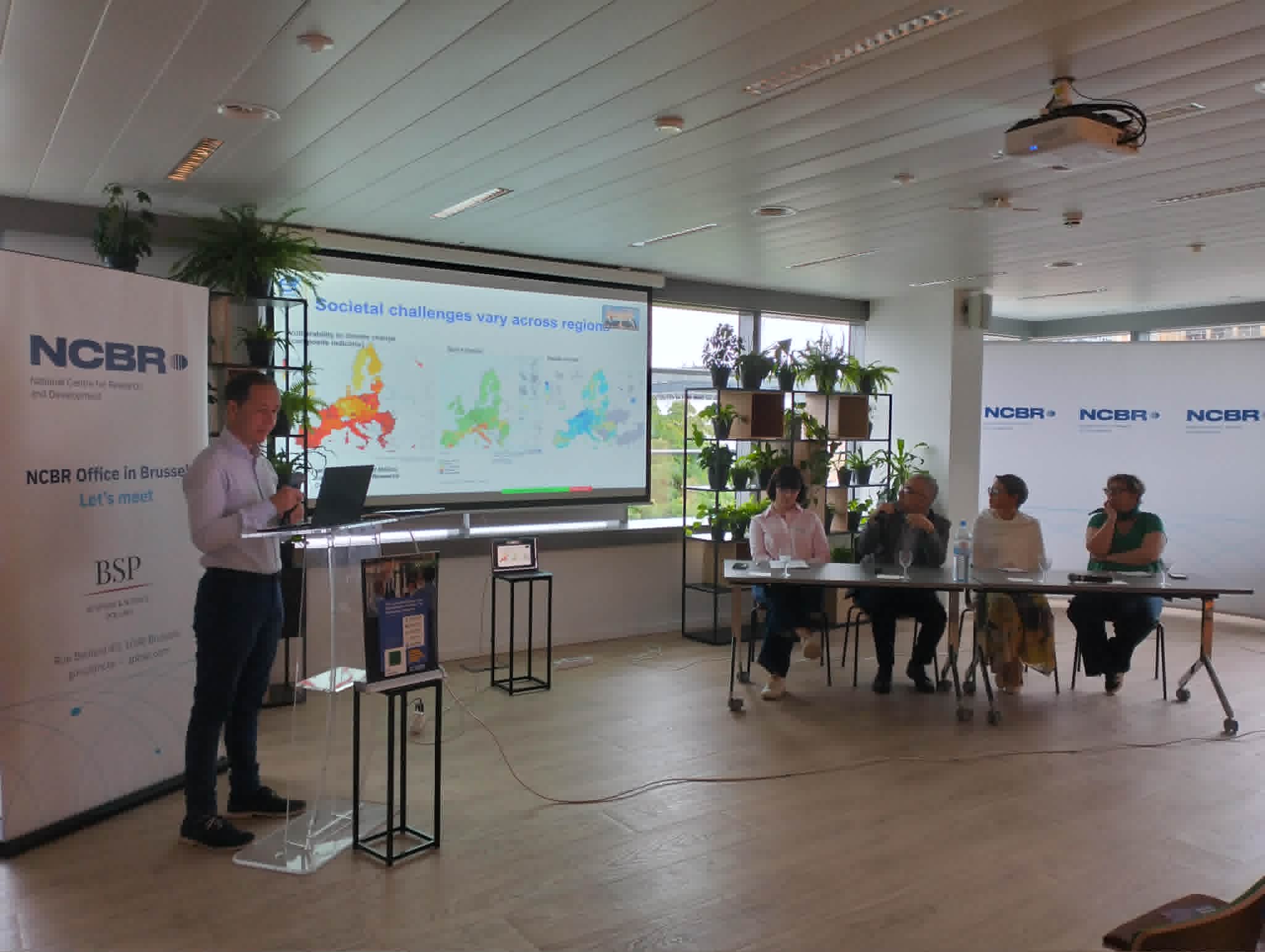
Two tools to turn diagnosis into action
Following the panel, two concrete instruments developed within the WiderAdvance Facility were presented to participants.
Philippe Holstein (Ruizia) presented the Regional Knowledge Valorisation System Assessment Tool — a self-assessment framework built from 140+ sources, expert interviews, 20 quantitative indicators and 88 qualitative questions. The tool enables regional policymakers to benchmark their valorisation system against EU averages, identify structural bottlenecks, and prioritise actions according to one of six evidence-based regional profiles. Co-designed with regional authorities representatives, it is now integrated into the WiderAdvance Facility website, with a third version incorporating tailored policy recommendations expected by September 2026.
Carolina Medeiros (FRCT, Azores) presented the Funding Matrix — a structured mapping of 245 funding programmes (44 EU-level, 201 national and regional) tailored to Widening countries and outermost regions. Users can filter by country, programme level, and thematic alignment with Horizon Europe Pillar II clusters, enabling them to identify complementary funding opportunities and design structured pathways for the dissemination, exploitation and scale-up of their research results. The Matrix is also available on the WiderAdvance website.
Funding opportunities for Widening countries and outermost regions
The final session of the day was dedicated to the funding landscape ahead. Ian Gauci Borda (Xjenza Malta) presented an overview of upcoming Pillar II and Widening calls under Horizon Europe, providing participants with a forward-looking map of opportunities relevant to organisations in Widening countries and outermost regions. The presentation was followed by an open interactive discussion, allowing participants to explore project opportunities and connect the funding landscape with the systemic and practical insights gathered throughout the day.
What the day confirmed — and what it challenges us to do
The discussions reinforced what research and practice increasingly show: knowledge valorisation is a system, not a project. It requires a vision that encompasses intermediary capacity, organisational strategies, stakeholder networks, international openness, and funding synergies — taken together, and sustained through deliberate public policies.
The day also confirmed that the window is narrowing. Post-2027 programming decisions are being made now. If place-based innovation and knowledge valorisation are not written into the frameworks at this stage, they will not happen — and as Pirita Lindholm put it, "you can continue another 20 years trying to create synergies."
The event closed with a concrete next step: the development of a policy brief addressed to European institutions and regional authorities, translating the day's insights into forward-looking recommendations for the 2027–2033 cohesion policy cycle.
Join the conversation and shape the next generation of valorisation policies
Are you a policymaker, regional authority, or innovation agency in a Widening country or outermost region working to strengthen your knowledge valorisation system?
The WiderAdvance Regional Self-Assessment Tool was built with and for regions like yours. We are actively expanding our community of policymakers who use the tool to diagnose their regional system, compare with peers, and co-develop evidence-based recommendations for the 2027–2033 programming cycle.
We invite you to join this circle. Explore the tool, benchmark your region, and contribute your experience to a growing network of practitioners shaping the next generation of knowledge valorisation policies.
👉 Access the Self-Assessment Tool : Regional Knowledge Valorization Self-Assessment Tool
👉 Contact us to join the policy community :